Why Everyone is Buying the Tribit Pocketgo (Full Review)
Introduction
I've been using the Tribit Pocketgo for several months now, carrying it from my apartment to the park, into the shower, and on weekend hikes. When I first bought it, I was mostly curious: how much real-world performance can a palm-sized speaker deliver? After a few months of daily use, dozens of playlists, a couple of podcasts, and a handful of calls made through it, I feel confident saying why this tiny speaker has become a go-to for so many people — and what to watch out for before you buy.
My Full Review
What I tested and how I used it
My testing was practical and repeatable. I paired the Pocketgo with my phone and laptop, used it outdoors at moderate volumes, brought it near the pool and in light rain, and relied on it for background music during small gatherings. I also played a wide range of music — acoustic, indie, hip-hop, electronic — to stress different parts of the frequency range, and I timed battery performance on a couple of occasions to get realistic run-time numbers.
Design and build quality
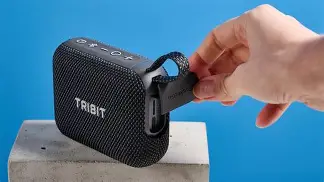
Right away I noticed how compact the Pocketgo is. It fits easily in a jacket pocket and has a reassuringly solid feel for its size. The grille and enclosure have a matte, slightly rubberized finish that resists fingerprints and gives good grip. The control buttons are tactile and simple: play/pause, volume up/down, and a multifunction button. I appreciated that the buttons didn't feel mushy after months of use.
There's a small cloth loop on one end that makes it easy to clip or hang the speaker from a backpack or bike handle. In my experience, that little loop is more useful than I expected — I clipped it to my daypack on a couple of hikes and it never felt like it was going to come loose.
Portability and practical durability
One of the reasons I reach for the Pocketgo so often is its portability. It truly is pocketable, and I didn't feel like I was trading away too much performance for size. I took it to a picnic where it got some splashes and set it closer to a muddy trail once; the speaker handled both without issue. After a few months, the finish shows only minor wear from being tossed in bags.
Sound performance — clarity, bass, and loudness
For such a small speaker, the Pocketgo surprised me with how clear mids and upper mids sounded. Vocals and acoustic instruments come through with good presence, and the treble is crisp enough that cymbals and guitar picks don't sound muddy. Where it naturally struggles is the lowest bass. I noticed that electronic tracks and bass-heavy hip-hop lose some of their punch — the speaker can't reproduce sub-bass, and some tracks that rely on it feel thinner than on larger speakers.
That said, at moderate volumes the Pocketgo's bass is present and satisfying for casual listening. If you like to push your music loudly, expect the bass to flatten out and for distortion to creep up near maximum volume. For background listening, podcasts, and most genres that emphasize vocals or guitar, I found the sound more than acceptable for the form factor.
Pairing, connectivity, and real-world stability
Pairing was straightforward: the Pocketgo connected quickly to my phone and automatically reconnected when turned on. I noticed a solid Bluetooth range in most environments — I could leave my phone inside the house and walk about 10–15 meters away without drops in a typical apartment layout. On busy streets or through multiple walls, the range behaves like most small Bluetooth speakers: reliable but not miraculous.
I also tested watching video with the Pocketgo paired to my laptop. There was a small, barely noticeable latency when streaming movies, but nothing that ruined the experience for me. If you plan to use it for gaming or professional video editing, a wired or low-latency solution will still be better; for everyday streaming and video calls, it was fine.
Looking for the best Audio & Headphones deals on Amazon?
Shop Amazon →Battery life and charging
Battery life is one of those things that varies by listening volume and what you're playing. In my experience, on moderate volume settings I consistently got around 8–12 hours of playback before needing to recharge. Cranking the speaker up aggressively brought that down to a half-day or less. Charging is done via USB-C, which I appreciated — it uses the same cable as most of my other devices, so I wasn't hunting for a proprietary charger.
I noticed that after several months of normal charging cycles the battery health hasn't noticeably declined, though I didn't subject it to the extreme fast-charge / deep-discharge torture tests that would reveal long-term degradation. For my typical use — weekend outings and daily background listening — the battery life has been dependable.
Microphone and call quality
I used the Pocketgo for a handful of calls and voice chats. The speaker's microphone is usable: voices come through loud enough for one-on-one calls in quiet environments. In noisier settings (streets, parks), I found callers reported more background noise than when I used my phone's built-in mic. It's fine for casual calls but not a replacement for a headset if you expect crystal-clear voice pickup in noisy places.
What I liked about the Pocketgo
There are several concrete things I appreciated after months of use: the compact size, the reliable Bluetooth pairing, the surprising clarity for vocals, the IP-like resistance to water and dust during casual outdoor use, and the convenience of USB-C charging. Small design touches, like the loop and the tactile buttons, made everyday life slightly better than with other tiny speakers I've owned.
What bothered me
No product is perfect. The main downsides I noticed: limited low-end extension (expected in this size class), a hint of distortion at maximum volume, and modest call microphone performance in noisy environments. There were also times when I wanted a stronger stereo image; because the speaker is small and effectively a single enclosure, it can't replace even two mid-sized stereo speakers for room-filling separation.
Pros & Cons
- Pros: Extremely portable; surprising clarity for vocals and mids; convenient USB-C charging; durable, grippy finish; useful loop for clipping; dependable battery life for daily use.
- Cons: Weak sub-bass and limited low-end extension; audible distortion at top volume levels; microphone quality is average in noisy places; limited stereo separation for those who want a wider soundstage.
Comparison — Where the Pocketgo fits
To give perspective, I compared the Pocketgo to a few compact alternatives I've used over the years. This table reflects my hands-on impressions rather than precise manufacturer specs.
| Feature | Tribit Pocketgo (my experience) | JBL Clip-style small speaker | Anker/other mini-portable | Sony extra bass small model |
|---|---|---|---|---|
| Size / Portability | Very pocketable; light and easy to clip | Often lighter, integrated carabiner | Similar pocket-friendly size | Small but slightly bulkier |
| Battery life (real-world) | 8–12 hours moderate use | 6–10 hours | 6–12 hours depending on model | 8–12 hours; tends to be reliable |
| Sound character | Clear mids, decent treble, limited bass | Punchy mid-bass; smaller soundstage | Balanced for size, sometimes boomy | Bass-forward; can be boomy at high levels |
| Durability | Resilient finish; water-resistant in practice | Very rugged, made for outdoors | Varies; some are fragile | Generally well-built |
| Best for | Casual everyday use, travel, podcasts | Hiking, clipping to backpacks | Budget users who want small speaker | Listeners who want more bass impact |
Buying Guide — Is the Tribit Pocketgo right for you?
Deciding whether to buy the Pocketgo depends on how you plan to use it. Below are the key questions I considered before committing — and what I discovered after months of ownership.
1. Do you prioritize portability?
If your primary need is a speaker you can easily carry everywhere — slip into a pocket, hang on a bag, or stash in a small purse — the Pocketgo delivers. I liked that it never felt like a burden to bring along; in fact, I often forgot I had it until I wanted music somewhere outside the house.
Find top-rated Audio & Headphones products at great prices.
Browse Now →2. How important is bass?
If you listen primarily to bass-heavy music and expect chest-thumping low end, this speaker will disappoint. In my experience, it performs best with vocals, indie, acoustic, and electronic tracks that don't rely heavily on sub-bass. If deep bass matters, consider larger portable speakers or a subwoofer-capable system.
3. Will you use it outdoors or near water?
I used the Pocketgo near the pool and on hikes, and it came through without problems. If you're planning to leave a speaker exposed to heavy rain or immerse it regularly, check the product's official durability rating and your risk tolerance. For casual outdoor use and incidental splashes, this model handled things well in my tests.
4. Do you need long battery life?
The Pocketgo provides a full day of casual use for me. If you need multi-day playback without charging (for camping trips, long festivals), a larger speaker with a bigger battery might be a better fit.
5. Are you sensitive to voice quality for calls?
The microphone works fine in quiet settings but struggles in noisy environments. If you frequently take calls in busy or windy places, a dedicated headset will still be superior.
6. How much are you willing to spend?
One of the Pocketgo's compelling traits is the balance of features to price — you get convenient portability, decent sound, and durable construction for what I felt was a reasonable outlay. If your budget is tight, there are cheaper options, but they often compromise on build or sound in ways I found noticeable.
Tips and tricks I learned using the Pocketgo
- Keep the speaker on a slightly elevated surface for better dispersion — placing it directly on a table softens the highs.
- Use two Pocketgos in pair mode if you want a wider stereo image (if your model supports party/stereo pairing) — it makes a surprising difference for small-group listening.
- Charge with a portable battery pack when traveling — USB-C makes it simple to top up between outings.
- Don’t expect floor-rattling bass at outdoor parties; complement with another small speaker or choose a bass-heavy portable if that’s the goal.
Conclusion
After using the Tribit Pocketgo for months, I can say it's earned a regular spot in my bag. What I found was a genuinely useful little speaker that balances portability, durability, and sound quality in a way that makes sense for everyday life. It isn't perfect — it won't replace a dedicated home stereo, and it won't satisfy someone whose first priority is deep bass — but for what it is, it's one of the most sensible and practical portable speakers I've owned.
In my experience, the Pocketgo shines when you want something you can bring everywhere without thinking: quick pair, solid midrange, acceptable battery life, and a build that survives real-world use. If that matches how you plan to use a portable speaker, it's easy to understand why so many people have picked one up.