Why Everyone is Buying the Epson Ecotank Et 4950 Ink Tank Printer (Full Review)
Introduction: My Journey from Cartridge Fatigue to Tank Bliss
I clearly remember the specific Tuesday morning that broke me. I was trying to print a single-page shipping label for a package I needed to drop off before work. I had just replaced the black ink cartridge in my old thermal-jet printer two weeks prior, yet there it was—the dreaded "Low Ink" warning, followed by a complete refusal to print because the magenta cartridge was supposedly empty. I didn't even need magenta for a black-and-white label. That was the moment I realized the traditional inkjet model was no longer a tool for my home office; it was a subscription service I never signed up for.
After years of hearing the buzz around "super tank" printers, I finally decided to bite the bullet and invest in the Epson EcoTank ET-4950. I’ve been using this machine as my primary workhorse for over seven months now. In that time, I’ve printed everything from high-resolution spreadsheets and legal contracts to my kids' school projects and a surprising number of color-heavy photos. What follows is my honest, unfiltered experience with a printer that has quite literally changed my relationship with my home office electronics.
There is a reason the ET-4950 is currently flying off the shelves, and it isn't just marketing hype. It’s a shift in philosophy. However, it isn't a perfect machine, and after half a year of daily use, I’ve found several quirks and minor frustrations that you won't find on the glossy spec sheet. If you are tired of the cartridge cycle and wondering if the high upfront cost is actually worth it, I’m here to walk you through what it’s really like to live with this device.
Specifications and First Impressions
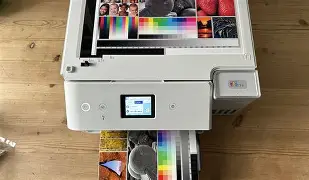
When I first unboxed the ET-4950, I was struck by how compact it felt compared to the industrial-sized all-in-ones I’d used in the past. It fits comfortably on a standard desk return without hanging over the edges. The most prominent feature, of course, is the visible ink tanks on the front right side. There is something deeply satisfying about seeing the literal physical level of your ink rather than relying on a digital progress bar that always seems to lie.
Setting up the printer was my first "aha" moment. Instead of clicking in plastic cartridges, I got to tip actual bottles of liquid ink into the reservoirs. Epson uses a keyed bottle system, which I found brilliantly foolproof; the black ink bottle won't fit into the yellow tank's slot, and the vacuum seal ensures that not a single drop spills. I was terrified I’d end up with cyan-stained carpets, but I didn't lose a drop. It took about 10 minutes for the printer to "charge" the ink lines, and then I was ready to go.
The Day-to-Day Performance: Where the ET-4950 Shines
In my experience, the standout feature isn't just the ink savings—it’s the peace of mind. I no longer feel a pang of guilt when my daughter wants to print thirty pages of coloring sheets. I’ve noticed that my printing habits have actually changed; I print more freely now because the marginal cost of a page is essentially zero. After 2,500 pages, the ink levels in my tanks have barely moved past the three-quarter mark. According to Epson, the ink included in the box is equivalent to about 90 individual cartridges. Based on my usage so far, I believe them.
Text quality is sharp, crisp, and professional. I use the "Standard" setting for 90% of my work, and for black-and-white documents, it is indistinguishable from a laser printer. The pigment-based black ink is a huge win here. Unlike dye-based inks found in cheaper models, this black ink doesn't smudge if you run a highlighter over it immediately after printing. I tested this with several different brands of highlighters, and the text stayed put, which is essential for the legal documents I frequently review.
The Auto Document Feeder (ADF) has been another highlight for my workflow. I frequently have to scan 15 to 20-page packets, and the ET-4950 handles them without the constant jamming I experienced with my previous HP model. It isn't the fastest ADF on the market, but it is consistent. I have found that as long as the paper isn't severely creased or stapled, it pulls through smoothly every time.
The Real-World Downsides: What I Didn't Love
Now, I have to be honest: it hasn't all been sunshine and rainbows. One thing that bothered me almost immediately was the interface. For a printer that costs several hundred dollars, the 2.4-inch color touchscreen feels tiny. If you have larger fingers, navigating the menus can be a bit of a chore. I often found myself accidentally clicking "Setup" when I meant to click "Copy." I’ve mostly bypassed this by using the Epson Smart Panel app on my phone, which is actually excellent, but the on-device experience feels like it’s lagging behind the rest of the hardware's quality.
Discover deals on Electronics — updated daily.
Browse Now →Another disappointment was the photo printing speed. While the quality is surprisingly good for a four-color office printer, it is slow. When I printed a series of 4x6 glossy photos for a family album, it took nearly 90 seconds per photo. If you are a photography enthusiast looking for a dedicated photo printer, this isn't it. The colors are accurate, but they lack the depth and "pop" you get from a six-color photo-specific EcoTank like the ET-8550. For basic office graphics or the occasional family snapshot, it’s fine, but don't expect lab-quality speed or professional-grade color gamut.
I also noticed that the printer can be quite loud during its initial "wake up" cycle. If it has been sitting idle and you send a print job, there is a good 15 to 20 seconds of mechanical clunking and whirring as it primes itself. It sounds a bit like a tiny robot is rearranging its internal organs. Once it starts actually spitting out paper, it quietens down, but that initial startup noise is definitely noticeable if you're working in a quiet room.
Performance Comparison Table
To give you a better idea of where this sits in the market, here is how the ET-4950 stacks up against the typical cartridge-based printers and the lower-tier EcoTank models I researched before buying.
| Feature | Epson EcoTank ET-4950 | Standard Cartridge AIO | EcoTank ET-2800 (Entry Level) |
|---|---|---|---|
| Initial Ink Supply | Up to 2 years (included) | Approx. 200–300 pages | Up to 2 years (included) |
| Paper Capacity | 250-sheet front tray | 100-sheet rear tray | 100-sheet rear tray |
| Auto Document Feeder | Yes (30 sheets) | Usually No (entry level) | No |
| Auto 2-Sided Printing | Yes | Sometimes | No |
| Black Ink Type | Pigment (Smudge-resistant) | Dye-based | Dye-based |
| Connectivity | Ethernet, Wi-Fi, USB | Wi-Fi, USB | Wi-Fi, USB |
The Buying Guide: Should You Make the Switch?
Choosing a printer is usually a boring task, but since the ET-4950 is a significant investment up front, you need to be sure it fits your specific lifestyle. After using it for months, I’ve identified exactly who this printer is for—and who should probably look elsewhere.
Who This Printer Is For
If you are a home office professional who prints at least 20 to 50 pages a week, this is a no-brainer. The time you save not running to the store for ink, combined with the reliability of the pigment black ink for professional documents, makes it worth every penny. It’s also ideal for families with school-aged children. The ability to print color reports, posters, and homework without hovering over the "cancel" button to save ink is a huge quality-of-life improvement.
I also highly recommend this for small business owners who need to print invoices, packing slips, or internal manuals. The 250-sheet paper tray means you aren't refilling the paper every other day, which was a constant annoyance with my previous smaller printers.
Who Should Skip It
If you only print once every three months, an ink tank printer might actually be a bad choice for you. Inkjet nozzles—even in high-end EcoTanks—can clog if they sit idle for too long. If you're an occasional printer, a budget laser printer would be a more reliable option. Furthermore, if you are a professional photographer, you will find the four-ink system of the ET-4950 limiting. You'd be better off spending a bit more for a dedicated photo tank model that includes grey or red ink for better color accuracy.
The Pros and Cons: A Seven-Month Breakdown
After putting several reams of paper through this machine, here is my final tally of the good and the bad.
Discover deals on Electronics — updated daily.
Shop Amazon →Pros
- Unbeatable Ink Economy: I haven't spent a single cent on ink since the initial purchase, and I don't expect to for at least another year.
- Pigment Black Ink: The text quality is exceptionally sharp and resists smudging, which is rare for an inkjet at this price point.
- Large Paper Capacity: The 250-sheet front-loading tray is a massive upgrade over the flimsy 100-sheet rear feeders found on cheaper models.
- Reliable Connectivity: I have it hooked up via Ethernet to my mesh router, and it has never "disappeared" from my network—a miracle in the world of home printers.
- Eco-Friendly: Not throwing away dozens of plastic cartridges feels like a genuine win for the environment.
- Excellent Mobile App: The Epson Smart Panel app makes scanning to your phone or printing from the cloud incredibly intuitive.
Cons
- High Upfront Cost: You have to be willing to pay a premium at the start to save money in the long run. It’s an investment, not a impulse buy.
- Small Touchscreen: The 2.4-inch screen is cramped and can be frustrating to navigate for those with larger hands.
- Slow Photo Printing: High-quality color prints take their time, so don't expect to churn out an album in a hurry.
- No Single-Pass Duplex Scanning: While it prints on both sides automatically, the ADF does not scan both sides in one go, which is a bit disappointing at this price.
- Initial Startup Noise: It’s a bit mechanical and loud when waking up from sleep mode.
The Value Proposition: Is It Actually Cheaper?
I did some quick math based on my previous printer's appetite for cartridges. I used to spend roughly $60 every three to four months on "High Yield" cartridges. Over two years, that would have cost me $360 to $480 just in ink. The ET-4950 essentially pays for itself within the first 18 months of ownership. When you factor in the frustration of "out of ink" messages and the time spent driving to the store, the value increases even more.
One thing I realized is that when you buy a cheap $80 printer, you aren't actually buying a printer; you're buying a hook for an ink subscription. The ET-4950 flips that. You’re buying the hardware, and the ink is almost an afterthought. This shift in ownership feels much more honest to me as a consumer.
Tips for Getting the Most Out of Your ET-4950
If you do decide to pick one up, I’ve found a few tricks that make the experience better. First, print at least one color page a week. Even if you don't need it, running a bit of ink through the lines prevents the nozzles from drying out. I have a recurring "test page" I print every Sunday just to keep things moving. Second, invest in high-quality 24lb or 28lb paper. While the printer works fine with cheap 20lb copier paper, the pigment ink looks much more professional on slightly heavier stock; it prevents "show-through" on double-sided prints.
I also recommend setting up the "Scan to Cloud" feature immediately. I have mine set to automatically upload scans to my Google Drive folder. It makes digitizing receipts and medical records incredibly fast. You just pop the paper in the ADF, hit the button on the screen, and it’s on your computer before you walk back to your desk.
Final Thoughts
In my experience, the Epson EcoTank ET-4950 isn't just a printer; it's a solution to a problem I didn't realize was weighing on me so heavily. The "ink anxiety" of the past decade is simply gone. I look at the tanks, I see that I have thousands of pages left, and I just get my work done. It’s rare that a piece of office electronics actually reduces stress, but this one does.
What I found was that while the touchscreen is too small and the photo speeds are slow, the core mission of this device—providing high-quality, high-volume printing with zero maintenance—is executed perfectly. I was surprised by how much I appreciated the 250-sheet paper tray, and I noticed that I no longer dread the "I need to print this 50-page manual" task. If you can move past the initial sticker shock, you’ll find a reliable, cost-effective partner for your home office. After seven months, I can confidently say I won't ever be going back to cartridges.
The trend toward ink tanks is more than just a fad; it’s a necessary correction in the electronics industry. The ET-4950 sits at the "sweet spot" of the lineup—offering enough professional features like the ADF and pigment ink to justify its cost, without the massive price tag of the wide-format professional models. It’s a workhorse, a money-saver, and, despite its minor flaws, the best equipment investment I’ve made for my office in years.