Which is Better Value? Lg Gram Book vs Dell Xps 16 2026 Compared
Introduction
Choosing between the LG Gram Book and the Dell XPS 16 (2026) often comes down to priorities: extreme portability and battery life versus a premium build and higher sustained performance. Both laptops target people who need large-screen productivity in a relatively compact package, but they approach the problem from different directions. This article compares the two across design, display, performance, battery life, connectivity, and real-world use cases to help prospective buyers decide which provides better value for their needs.
Overview at a glance
The LG Gram Book emphasizes featherweight design, long battery life, and sensible performance for productivity and media. Dell's XPS 16 (2026) leans toward a premium materials finish, stronger sustained performance for creative work, and an attention to display quality and thermal management. Value depends on what a buyer values most: absolute portability and all-day battery, or higher performance and a more luxurious chassis with potentially better speakers and display calibration out of the box.
Detailed review: LG Gram Book
Design and build
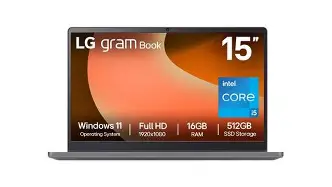
The LG Gram Book continues the Gram family’s focus on minimal weight. The chassis uses lightweight alloys and a slim profile that makes the laptop one of the most portable 16-inch options available. The design is understated and businesslike, favoring matte finishes and subtle branding. For frequent travelers and commuters, the Gram’s lightness is a tangible benefit: carrying it for long periods is significantly less fatiguing than most other 16-inch machines.
Display
LG equips the Gram Book with a high-resolution display that balances sharpness and battery efficiency. The panel typically supports wide color coverage suitable for media consumption and light creative work. While color-critical professionals may prefer hardware-calibrated screens, the Gram’s display is more than sufficient for office tasks, web design, photo culling, and video playback.
Performance
The Gram Book targets efficient performance rather than raw power. It is configured to handle everyday productivity workloads—web browsing, document editing, spreadsheets, light photo editing, and video conferencing—while prioritizing thermals and battery life. It can handle bursts of heavier tasks, but sustained, thermally demanding workflows (large video exports, extended 3D rendering) will push performance limits compared with thicker, higher-TDP laptops.
Battery life
One of the Gram Book’s strongest advantages is battery life. The combination of a large battery, efficient components, and a power-tuned chassis yields long runtime in typical mixed use. For professionals who work away from plugs—students, field researchers, frequent flyers—the Gram Book often delivers a full workday of use on a single charge under conservative usage patterns.
Ports and connectivity
The Gram Book usually offers a pragmatic port selection: USB-A, USB-C with power delivery, HDMI or micro-HDMI depending on the configuration, and a microSD or full-size SD card slot on some models. This mix suits users who need to connect an external display, a thumb drive, or a camera card without carrying many dongles.
Keyboard, trackpad, and extras
LG provides a comfortable keyboard with adequate travel for long typing sessions, and a responsive trackpad. The Gram often includes tuned audio suitable for casual media consumption, and its webcam and microphones are positioned for videoconferencing. Build quality favors lightweight materials over the heftier premium feel of some competitors.
Pros & Cons
- Pros:
- Exceptionally light for a 16-inch laptop, ideal for travel.
- Very good battery life in everyday usage.
- Practical port selection reduces reliance on dongles.
- Quiet thermals under moderate load.
- Cons:
- Not designed for sustained heavy-duty creative workloads.
- Build feels lighter—less “premium” tactile feedback than thicker metal unibodies.
- Display, while good, may not satisfy color-critical professionals without calibration.
Detailed review: Dell XPS 16 (2026)
Design and build
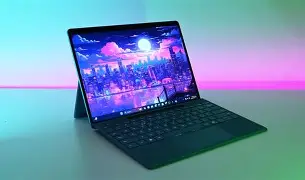
The Dell XPS 16 2026 model builds on the XPS reputation for premium materials and tight fit-and-finish. Expect a solid machined aluminum chassis, narrow bezels, and a refined hinge. The XPS line emphasizes a slightly more substantial and premium feel compared with extremely lightweight alternatives, which many users appreciate for perceived durability and premium aesthetics.
Display
Dell prioritizes display quality on the XPS 16. The panel typically offers higher peak brightness, excellent color accuracy out of the box, and options for very high-resolution or OLED panels tuned for creative workflows. For photo and video editors, the XPS 16’s display options make it a compelling choice, particularly for tasks where color fidelity and contrast matter.
Shop the latest Laptops & Computers picks on Amazon.
View Offers →Performance
The XPS 16 2026 targets users who need stronger performance: larger CPU TDP, optional discrete graphics or more capable integrated solutions, and thermals designed to sustain higher clock speeds for longer. As a result, it handles heavier content creation workloads—video encoding, multi-track audio work, and some 3D tasks—more reliably than the ultralight Gram Book. This comes with trade-offs: slightly more weight and, in some cases, shorter battery life under heavy load.
Battery life
Battery life on the XPS 16 is competitive but tends to vary more with workload due to higher-performance configurations and brighter, higher-resolution displays. For mixed productivity tasks, runtimes are solid and will usually cover a full workday with conservative brightness and power settings. Under sustained creative loads, expect faster battery drain relative to more efficiency-focused laptops.
Ports and connectivity
The XPS 16 usually provides a comprehensive and modern selection of ports—multiple USB-C/Thunderbolt ports, USB-A (depending on configuration), HDMI or DisplayPort via USB-C adapters, and a full-size SD card reader in some builds. Dell often emphasizes fast connectivity for external GPUs, docks, and multi-monitor setups.
Keyboard, trackpad, and extras
The keyboard and trackpad on XPS machines are generally well-regarded for comfort and precision. The XPS 16 may include superior speakers, better webcam placement or sensors, and enhanced support options. Dell’s ProSupport and on-site warranties are often cited by business buyers as valuable additions.
Pros & Cons
- Pros:
- Premium build quality and tactile finish.
- Excellent display options suitable for creative professionals.
- Stronger sustained performance for heavier workloads.
- Comprehensive port selection and expandability.
- Cons:
- Heavier and less portable than the ultra-light Gram Book.
- Potentially shorter battery life under sustained load.
- Generally a higher price point for top configurations.
Side-by-side comparison
| Category | LG Gram Book | Dell XPS 16 (2026) |
|---|---|---|
| Design & Build | Ultra-lightweight chassis focused on portability | Premium aluminum unibody with refined finish |
| Display | High-resolution, efficient panel; great for media and productivity | Higher-brightness and color-accurate options; better for creatives |
| Performance | Efficient everyday performance; good for light creative tasks | Stronger sustained performance; better for video/photo editing |
| Battery Life | Excellent for mixed usage and long travel days | Good for productivity; reduced under heavy creative loads |
| Ports | Practical mix (USB-A, USB-C, HDMI/SD on some models) | Comprehensive modern ports; Thunderbolt support and SD in some builds |
| Portability | Best-in-class for 16-inch lightweight portability | Balanced—portable but slightly heavier due to premium materials |
| Who it's for | Frequent travelers, students, professionals prioritizing battery | Creative professionals, power users, anyone needing sustained throughput |
| Value proposition | Exceptional value for mobility and battery life | Superior value for performance and display quality in creative workflows |
Real-world use cases and what buyers typically care about
Different buyers will weigh features differently. Here are common buyer profiles and how each laptop maps to their priorities:
- Frequent travelers and road warriors: Priority is low weight, long battery life, and quiet operation. The Gram Book shines here; its light chassis is comfortable to carry all day and battery life reduces dependence on airport or cafe power outlets.
- Students and hybrid workers: These buyers value portability, battery life, and a comfortable keyboard for note-taking. The Gram Book is a natural fit, though the XPS 16 offers a more premium feel for those willing to trade a bit of weight for a better display.
- Content creators and photo/video editors: Color accuracy, display brightness, and sustained CPU/GPU performance matter most. The XPS 16’s display options and thermal headroom usually offer more consistent results for editing and exporting media.
- Office productivity and multitasking: If the workload is mostly documents, spreadsheets, and video calls, both laptops perform well. The Gram Book may offer better battery life; the XPS may offer a more pleasant screen and speakers for long conference calls.
- Light gaming or hobbyist rendering: Both can handle casual gaming, but the XPS 16 will sustain higher frame rates and better performance for longer sessions if configured with a stronger GPU option.
Buying guide: How to choose the right one
When deciding between the LG Gram Book and Dell XPS 16 (2026), consider the following factors and questions to identify which delivers better value for a given buyer:
1. Portability vs. performance
Decide whether weight or sustained performance is more important. If the laptop will be carried daily between classes, meetings, or flights, prioritize weight and battery. If it will sit at a desk and be used for heavy creative tasks, prioritize performance and a higher-quality display.
2. Battery life expectations
Estimate a typical day: how many hours will be away from a power source? For long stretches of work or travel, the Gram Book’s efficiency-focused design will mean fewer chargers to carry. If short battery life under load is acceptable in exchange for higher performance, the XPS is appropriate.
3. Display needs
Assess display requirements. Photographers and videographers often need accurate color and high brightness; the XPS’s display options and factory calibration may reduce the need for additional color-correction hardware. For general office work and media consumption, the Gram’s display is usually sufficient.
Looking for the best Laptops & Computers deals on Amazon?
View Offers →4. Ports and expandability
Consider peripherals: Does one need an SD card slot, Thunderbolt docks, or an external GPU in the future? Dell tends to offer broader support for docks and high-speed peripherals; LG keeps enough ports for travel without over-emphasizing expandability.
5. Thermals and noise
Think about how hot and loud the laptop can be under load. The Gram prioritizes quiet operation at the cost of throttling sooner under sustained load. The XPS typically runs warmer but sustains higher clocks for longer, benefiting heavier workloads.
6. Longevity and service
Warranty and service support matter for business buyers. Dell’s business support options and service networks are often cited as advantages for enterprise users; LG’s warranty and service are competitive but may vary based on region.
7. Budget and total cost of ownership
Compare configurations that match real needs rather than chasing top-spec models. A mid-range XPS configuration focused on display and CPU may deliver better productivity-per-dollar for creatives, while a similarly priced Gram Book will maximize portability and battery life for travelers.
Practical tips before purchase
- Prioritize the display option you will actually use—opt for color-accurate panels if editing photos or video.
- Consider RAM and storage as long-term investments; upgrading later can be limited on thin laptops.
- Test keyboard and trackpad in person if possible—typing comfort is subjective and critical for heavy text work.
- Check real-world battery tests and reviews rather than relying solely on manufacturer numbers.
- Factor in the weight of chargers and accessories when evaluating portability.
Conclusion
There is no single “better” laptop across all scenarios—value depends on the user’s priorities. For buyers who prioritize portability, long battery life, and the lightest 16-inch experience possible, the LG Gram Book represents outstanding value. It reduces travel fatigue and delivers reliable everyday performance for most professional and student workflows.
For those whose work demands sustained performance, superior display quality, and a premium chassis—particularly creative professionals and power users—the Dell XPS 16 (2026) generally offers better value. It balances performance, display fidelity, and build quality in ways that justify its higher price for people who will consistently use those strengths.
Ultimately, choose the Gram Book if mobility and battery longevity are paramount; choose the XPS 16 if display accuracy and longer sustained performance are the deciding factors. Evaluating real-world workflows—how long the laptop must run unplugged, the need for color-critical editing, and whether the device will be carried daily—will point to the device that delivers the best practical value for each buyer.