Don't Buy the Hisense 116Ux Until You Read This Full Analysis
The landscape of the consumer television market has undergone a radical transformation in the last three years. We have moved past the era where a 75-inch screen was considered the "theatre-sized" limit for most living rooms. Today, ultra-large-format displays are the new frontier, and the Hisense 116Ux stands at the absolute pinnacle of this movement. Part of the company's prestigious ULED X lineup, this 116-inch behemoth is not just a television; it is a statement of engineering intent. It seeks to bridge the gap between traditional LED-LCD panels and the high-end project market, offering a level of brightness and contrast that even the best laser projectors struggle to match.
However, an investment of this magnitude—both in terms of financial cost and physical space—requires a level of scrutiny far beyond a standard electronics purchase. At 116 inches diagonally, this screen is nearly ten feet across. It is a piece of infrastructure as much as it is an appliance. For the discerning buyer, the question isn't just "Is the picture good?" but rather "Does this technology justify its footprint and price tag over the alternatives?" This analysis dives deep into the specifications, real-world performance, and practical ownership considerations of the Hisense 116Ux to determine if it is the right centerpiece for your home cinema.
The Engineering Marvel: Mini-LED at an Unprecedented Scale
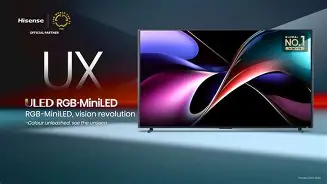
To understand why the 116Ux is generating such conversation among enthusiasts, one must first understand the underlying technology. Hisense has utilized its proprietary Hi-View Engine X to manage what is arguably the most complex backlighting system ever put into a consumer-grade television. The 116Ux features a Mini-LED backlit system with over 40,000 local dimming zones. In the world of displays, zones are the currency of quality. By breaking the backlight into tens of thousands of tiny, independently controlled areas, the TV can achieve deep blacks right next to searingly bright highlights without the "blooming" or "halo" effect that plagues cheaper large screens.
The peak brightness is another area where the 116Ux defies expectations. Rated to hit up to 5,000 nits, it is significantly brighter than almost any OLED on the market and triple the brightness of a standard high-end LED TV. This brightness isn't just for showing off; it is the engine behind High Dynamic Range (HDR) content. When you watch a scene with a sunset, the glint of sun on water, or a flickering candle in a dark room, the 116Ux has the headroom to make those highlights feel lifelike and tactile. This level of luminance is particularly vital in the 116-inch form factor, where the sheer size of the screen can often lead to a perceived loss in contrast if the backlight isn't powerful enough.
Color Accuracy and the Quantum Dot Layer
Size means nothing if the colors are washed out. Hisense employs a Quantum Dot Color layer, which uses nanocrystals to refine the light produced by the Mini-LEDs. This results in a color gamut that covers over 90% of the DCI-P3 space, the standard used in digital cinema. In practice, this means that skin tones look natural rather than orange, and primary colors like the red of a sports car or the green of a football pitch have a vibrancy that feels grounded in reality. The 20,000-bit grayscale processing further ensures that transitions between shades—such as a gradient in a blue sky—are smooth and free of "banding" artifacts that often distract viewers on larger displays.
Real-World Use Cases: Beyond the Specification Sheet
A TV like the 116Ux isn't meant for a casual bedroom setup or a cramped apartment. It is designed for three specific environments: the dedicated home theater, the "Great Room" with high ambient light, and the ultimate gaming lair. Each of these use cases reveals different strengths and weaknesses of the panel.
The Dedicated Home Theater Evolution
Traditionally, if you wanted a 100-plus inch image, you bought a projector. Projectors offer that classic cinema feel, but they require a darkened room, a high-quality screen, and often a professional calibration. The 116Ux challenges this paradigm. Unlike a projector, the 116Ux does not lose contrast when the lights are on. For the homeowner who wants a cinema-sized experience but doesn't want to sit in a "bat cave" to enjoy it, this TV is a revelation. The black levels, while not quite at the pixel-perfect infinite black of an OLED, are deep enough to provide a convincing cinematic depth that traditional projection systems rarely achieve without costing six figures.
Shop the latest TVs & Home Theater picks on Amazon.
Browse Now →The Bright Living Room Challenge
One of the biggest hurdles for large screens is glare. The 116Ux features an ultra-low reflection coating and wide-angle viewing film. Because the screen is so large, viewers are often sitting at angles relative to the edges of the panel. On a standard VA (Vertical Alignment) panel, you might see colors wash out at the edges. Hisense has mitigated this significantly. In a room with floor-to-ceiling windows, the 5,000-nit brightness allows the content to remains visible even in the middle of the afternoon. This makes it a superior choice for "Big Game" parties or daytime viewing where closing the curtains isn't always desirable.
Gaming at 116 Inches
For gamers, the 116Ux is an immersive experience that borders on overwhelming. It supports a 144Hz refresh rate, which is the current gold standard for high-end console and PC gaming. With HDMI 2.1 ports, it handles 4K gaming at high frame rates with ease. Features like Variable Refresh Rate (VRR) and Auto Low Latency Mode (ALLM) ensure that there is no screen tearing or perceptible lag. Playing an open-world RPG or a racing simulator on a screen this large creates a peripheral vision effect that smaller TVs cannot replicate. However, users must ensure they have enough distance from the screen; sitting too close to a 116-inch panel can lead to "neck fatigue" as you try to track UI elements in the corners of the display.
Detailed Comparison: 116Ux vs. Alternatives
When considering a TV of this scale, it is helpful to see how it stacks up against the other two primary ways to get a massive image: the 98-inch "standard" large LED and the 120-inch Laser TV (Ultra Short Throw Projector).
| Feature | Hisense 116Ux (Mini-LED) | Standard 98-inch LED | 120-inch Laser TV (UST) |
|---|---|---|---|
| Display Area | Approx. 5,700 sq inches | Approx. 4,100 sq inches | Approx. 6,100 sq inches |
| Peak Brightness | 5,000 Nits | 1,500 - 2,500 Nits | 300 - 500 Nits (Perceived) |
| Dimming Zones | 40,000+ | 500 - 2,000 | None (Global Dimming) |
| Room Conditions | Any lighting Condition | Good in bright rooms | Best in dark rooms |
| Installation | Very difficult (Heavy/Permanent) | Moderate (Standard mount) | Easy to position; Needs Screen |
| Black Levels | Excellent (Near-OLED) | Good | Fair to Good |
Comprehensive Pros and Cons
Before moving forward with a purchase, it is essential to weigh the objective advantages against the logistical and technical drawbacks of such a specialized piece of hardware.
- Unmatched Brightness: At 5,000 nits, it is one of the brightest consumer displays ever made, creating incredible HDR impact and fighting glare in any environment.
- Precision Backlighting: The 40,000+ local dimming zones virtually eliminate blooming, giving you the high-contrast benefit of OLED with the brightness of LED.
- Immersive Scale: The leap from 98 inches to 116 inches is statistically massive, providing nearly 40% more screen real estate and a true theater-at-home feeling.
- Advanced Audio: It features a built-in 4.2.2 channel sound system that supports Dolby Atmos, which is surprisingly capable for a flat-panel TV, though most buyers will still opt for external speakers.
- Future-Proof Connectivity: With Wi-Fi 6E, HDMI 2.1, and support for all major HDR formats (Dolby Vision IQ, HDR10+, etc.), it is ready for the next decade of content.
- Construction Quality: The build is robust, utilizing premium materials that feel much more substantial than the plastic-heavy designs of entry-level large screens.
- Physical Logistics: This TV weighs over 200 pounds without the stand. It requires a reinforced wall for mounting and at least three to four people for safe installation.
- Power Consumption: Driving 40,000 zones and 5,000 nits requires significant energy. Expect your electricity bill to reflect the usage of this "wall of light."
- Heat Dissipation: Large Mini-LED panels can generate a noticeable amount of heat. In a small room, you may feel the temperature rise after a few hours of intense HDR viewing.
- Viewing Distance Requirements: To avoid seeing pixels or straining your eyes, a minimum viewing distance of 10 to 12 feet is recommended, which limits the rooms it can effectively inhabit.
- Price Premium: The jump in manufacturing costs from 98-inch glass to 116-inch glass is exponential, making this a luxury item rather than a value play.
Buying Guide: Is Your Home Ready?
Because the Hisense 116Ux is so large, the buying process is different than picking up a 55-inch TV. There are three critical factors you must verify before clicking the "buy" button: logistics, mounting, and acoustics.
Logistics and Entry Points
It is a common story in the ultra-large TV world: the TV arrives, but it cannot fit through the door. You must measure every doorway, hallway turn, and elevator in the path from the delivery truck to your media room. The box for the 116Ux is enormous. If you live in a multi-story home, you must ensure your staircase can handle the turn radius. In some cases, professional installers have had to remove windows to crane-in displays of this size.
Wall Strength and Mounting
A 116-inch TV is a massive lever. If you plan to wall-mount it, standard dry-wall anchors are insufficient. You must secure the mount directly into the studs, and even then, many enthusiasts recommend reinforcing the wall with a plywood backing or a dedicated steel mounting frame. If you are using the included stand, ensure your media console is deep enough and rated for the weight. The 116Ux is front-heavy, meaning stability is paramount to prevent tipping.
Find top-rated TVs & Home Theater products at great prices.
Browse Now →Integrating Audio
While the internal speakers are excellent for a TV, a screen this large creates an "acoustic shadow." If you place a center channel speaker below the TV, the sound may feel like it is coming from the floor because the screen is so tall. Ideally, the 116Ux should be paired with an "above and below" dual-center speaker setup or a very high-quality soundbar that can project the "phantom center" to the middle of the screen. Alternatively, an in-wall speaker system surrounding the frame is the best way to match the scale of the audio to the scale of the visuals.
Refining the Experience: Calibrating the 116Ux
Out of the box, Hisense provides several modes, including Filmmaker Mode, which disables unnecessary motion smoothing and sets the color temperature to the industry-standard D65. For most users, this is the best setting. However, on a screen this large, small errors in color accuracy are magnified. If you are investing in the 116Ux, it is highly recommended to have a professional ISF calibration. A calibrator can balance the massive light output against the black levels to ensure that shadow detail isn't lost in the pursuit of "wow factor" brightness. This ensures that when you're watching a dark thriller like The Batman or Dune, you can see the textures in the shadows without the screen looking grey.
The Verdict: Who is the Hisense 116Ux For?
The Hisense 116Ux represent a "changing of the guard." It signals that the era of being forced to choose between size (projectors) and quality (LED/OLED) is ending. You can now have both. It is a product for the person who wants the absolute best and has the space to accommodate it. It is for the sports fan who wants the players to be life-sized and the cinema enthusiast who wants to feel the heat of the cinematography.
However, it is not a "plug and play" device. It is a commitment. You are committing to a specific room layout, a certain power draw, and a complex installation. If you are looking for a casual upgrade, a 98-inch model offers 80% of the experience for a significantly lower price and much less logistical headache. But if you want to push the boundaries of what is possible in home entertainment—if you want to own the definitive king of the ULED mountain—the 116Ux stands alone. It delivers a punchy, vibrant, and staggeringly large image that makes every other TV look small by comparison. As long as you have accounted for the physical realities of owning a ten-foot screen, the Hisense 116Ux is an investment that will transform how you interact with media for years to come.
Ultimately, the 116Ux fulfills the promise of the Mini-LED era. It proves that with enough zones, enough nits, and a large enough piece of glass, the home experience can finally rival—and in many ways, exceed—the local commercial cinema. Just remember: measure your doors twice, check your studs thrice, and prepare to never look at a 65-inch TV the same way again.