Botvac D7 Review: Real User Experience After 3 Months
I've been using the Botvac D7 for about three months now across a two-bedroom apartment with a mix of hardwood, tile, and medium-pile area rugs. I bought it because I wanted a robot vacuum that actually mapped my home, handled pet hair without constant babysitting, and would let me block off areas without physically moving anything. What I found was a capable machine with thoughtful navigation, very good edge cleaning, and a few real-world annoyances that only became obvious after repeated use.
Why I chose the Botvac D7
In my experience buying a robot vacuum is always a balance of three things: cleaning performance, intelligence/navigation, and day-to-day reliability. I was specifically attracted to the Botvac D7 for its laser-based mapping, the promise of virtual no-go lines, and a D-shaped design that should, in theory, be better at corners than round robots. After three months of scheduling, manual spot cleans, and a few troubleshooting sessions, I have a clear sense of where it shines and where it falls short.
Setup and first impressions
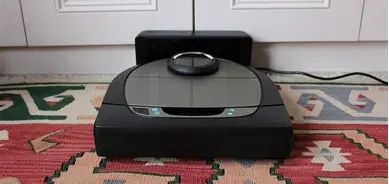
Unboxing and setup were straightforward. The app walked me through Wi‑Fi connection, and the D7 completed its initial mapping run without me having to intervene. I liked that it scanned the space methodically instead of bouncing around. The build feels sturdy — the D shape makes it look like it was designed with edge performance in mind, and that expectation mostly matched reality.
One thing I noticed right away was the height. The D7 is taller than some other models I’ve owned, which meant it couldn't fit under my low coffee table or certain bookcases. In my experience, measuring clearance before buying matters more than you might think; I had to move one piece of furniture to avoid creating a dead zone where dust accumulated.
Navigation and mapping (real-world behavior)
What I appreciated most was the LaserSmart mapping. The first full run produced a surprisingly accurate map of my apartment, complete with furniture outlines. In my experience, the robot rarely got lost — it planned logical cleaning lines and returned to its dock reliably when battery ran low. The virtual no-go lines in the app worked well for me: I drew a few lines to keep it out of an area with lots of cables and a delicate rug fringe, and it respected them on subsequent runs.
That said, there were times when the D7's path planning felt overconfident. It would attempt to squeeze between chair legs that, in hindsight, were a bit too close for safe passage. On two occasions it ended up wedged and required me to rescue it. After those incidents I used the app to place a no-go line and the problem went away, but the experience highlighted that you still need to scan your home for tight gaps.
Cleaning performance: daily use and edge work
On hardwood and tile, the D7 performed admirably. It picked up dust, crumbs, and pet hair in a single pass more often than not. The suction felt strong, and I noticed that the D-shape and side brush combo did a better job catching debris along baseboards and corners than some round robots I’ve used before. I was pleasantly surprised by how little manual edge sweeping I needed to do after a cleaning cycle.
Carpet performance was solid on low-to-medium-pile rugs. The D7 moved from hardwood to rugs without issue, and I observed a visible reduction in surface hair and debris over the weeks. On thicker, high-pile rugs it struggled more; it sometimes slowed down and made multiple passes in one spot but still left embedded dirt behind. If your home has deep-pile carpeting, plan on occasional manual touch-ups.
Pet hair was a frequent real-world test for me. I have a medium-shedding dog, and the D7 handled hair well overall. I did have to clean the main brush and side brush weekly because long hair wrapped around them — that's normal for any robot vacuum dealing with fur, but I was pleased that hair removal was straightforward with the included tools.
Battery life and runtime in my home
In my apartment (roughly 850–1,000 sq ft of actual cleaning area after furniture), I typically saw runtimes of about 75–90 minutes per charge depending on how many rugs it encountered. That was enough to finish a full scheduled run on most days. When battery dipped below the threshold mid-clean, the D7 returned to the dock, charged, and resumed cleaning where it left off — a feature I used multiple times and appreciated because it meant larger jobs still completed without my intervention.
Shop the latest Electronics picks on Amazon.
View Offers →One caveat: if you expect it to clean a very large open-plan house in a single continuous run, your mileage will vary. For my apartment it was fine; for larger homes, you'll want to consider either multiple scheduled runs per day or a model with a longer manufacturer-rated runtime.
App, connectivity, and smart features
The app provides a visual map, scheduling controls, and virtual boundaries. I noticed that the app connection could occasionally be slow to update after a run — the map would sometimes take a minute or two to refresh and show the latest cleaning activity. That didn't impact cleaning itself, but it was mildly annoying when I wanted to check status while away from home.
Integration with voice assistants worked as expected. I used voice commands to start and stop cleans when my phone wasn't nearby. The real-world reliability of these features was fine; however, if your Wi‑Fi is spotty the experience can degrade quickly, so make sure your robot's dock is within a stable network area.
Maintenance & ongoing costs
Expect to swap filters and brushes periodically. The D7 uses a HEPA-style filter that I replaced every 2–3 months in my usage pattern — I live with a pet, so heavier use is to be expected. Replacement brushes and filters are available through many retailers; I didn't find prices outrageous, but they are an ongoing cost. The bin is easy to empty, but it is not huge, so if you have a lot of loose debris you'll be emptying it frequently.
I also learned to check for tangled threads and hair on the main brush and the wheel casings every few runs. If you skip maintenance for a couple of weeks, performance starts to dip noticeably.
What I liked (specific things)
- Laser mapping is reliable: It consistently produced accurate maps and respected the virtual no-go lines I drew.
- Good edge and corner cleaning: The D-shape made a tangible difference along baseboards; debris at edges was picked up more effectively than with round robots I’ve owned.
- Strong suction on hard floors: Crumbs and dust were picked up cleanly most of the time.
- Resume after charge: It returned to the dock and finished runs without losing its place, which saved me from running partial cleans manually.
- Ease of maintenance: Brush removal and filter swaps are straightforward and don’t require tools.
What bothered me (real annoyances)
- Height and clearance: It couldn't reach under several low-profile pieces of furniture I thought it would, so those areas became dust traps.
- App refresh lag: The map and status can be slow to update, which made remote monitoring less snappy than I expected.
- Occasional wedging: It sometimes tried to squeeze into tight spots and got stuck; I had to set extra no-go lines after a couple of rescues.
- Brush hair wrap: Long hair tangled around the main brush frequently; this is common with most vacuums, but still an annoyance that required weekly attention.
- Dustbin capacity: Fair but not roomy — I emptied it more often than with some competing models.
Pros & Cons
- Pros
- Accurate laser mapping and virtual no-go lines
- Excellent edge/corner cleaning thanks to D-shaped design
- Strong suction on hard floors and low-to-medium pile carpets
- Resume-and-return functionality works reliably
- Straightforward maintenance and filter replacements
- Cons
- Taller body — won't fit under some low furniture
- App can be sluggish at updating maps/status
- Prone to hair wrap on the main brush if you have long-haired pets
- Occasional wedging in narrow gaps
- Smaller dustbin means more frequent emptying during heavy use
Quick comparison (Botvac D7 vs. a few common alternatives)
| Model | Suction / Cleaning | Navigation & Mapping | Maintenance | Best for |
|---|---|---|---|---|
| Botvac D7 | Strong on hard floors, good on low/medium rugs | Laser mapping, reliable virtual no-go lines | Brushes require regular hair removal, moderate filter cost | Homes that prioritize edge cleaning and mapping |
| Roomba i7 (example) | Very good overall, especially on carpets | Camera-based mapping, good smart features | Brushes need cleaning, bin size varies by model | Carpeted homes wanting smart mapping and strong suction |
| Roborock S6 (example) | Balanced suction, usually quieter | Lidar mapping, reliable paths, and hybrid mop options | Moderate — mopping adds maintenance tasks | Homes wanting a combo mop/vacuum and quiet operation |
Buying guide — what to consider before getting a Botvac D7
In my experience, whether the D7 is the right choice comes down to a few practical considerations.
Floor types and layout
If you have mostly hardwood or tile and a few area rugs, the D7 is a very good fit. If your home is wall-to-wall deep carpeting, you should temper expectations — it does well on low-to-medium pile but isn’t a heavy-duty carpet lifter. Also measure furniture clearances; if the robot can't fit under your sofa or coffee table, it won't help with dust under there.
Pets and hair
I have a dog and found the D7 adequate, but if you have a high-shedding pet or long hair everywhere, plan to clean the brush and filters frequently. This is normal, but it’s worth factoring into your maintenance routine.
Smart features and app expectations
If virtual boundaries, mapping, and voice control are important, the D7 delivers. In my experience the app is functional but not as polished as some competitors — expect occasional lag. If you rely heavily on instant remote status updates, consider models with faster app refreshes.
Find top-rated Electronics products at great prices.
Shop Amazon →Space and obstacles
Homes with lots of tight furniture gaps or many low-lying cables will require either physical interventions (tucking cables away) or drawing no-go areas in the app. I learned the hard way to clear obvious tangle hazards before a scheduled run.
Maintenance commitment
Factor in filter and brush replacements. If you want a truly low-maintenance setup, look for robots with larger bins or automatic dirt-emptying docks — the D7 works well but doesn't empty itself.
Noise and schedules
The D7 is not whisper-quiet. I scheduled runs for when I was out or in the afternoon when noise was less disruptive. If you live in a studio and want daytime cleaning while you work from home, plan around the sound.
Practical tips from my three-month experience
- Place the dock in a well-lit, central area with stable Wi‑Fi for reliable connectivity and easier resume-after-charge behavior.
- Draw virtual no-go lines for cords, fragile décor, and rug fringes instead of relying only on boundary strips; they're easier to adjust.
- Empty the bin after every other run if you have pets — it keeps suction consistent and prevents smells.
- Clean the main brush weekly if you have long-haired pets; keep the little cleaning tool handy by the dock.
- Map one floor at a time and avoid moving the dock frequently; the robot learns the layout faster that way.
Final thoughts and conclusion
After three months with the Botvac D7, my overall impression is that it's a smart, hardworking robot that delivers real cleaning value for the right home. What I appreciated most was its mapping accuracy and edge-cleaning performance — small but meaningful differences that reduced the time I spend sweeping baseboards. I was also pleased that the resume-and-return function worked consistently; that feature alone saved me time on larger cleaning sessions.
My disappointments were practical: the robot's height excluded it from some under-furniture zones, the app sometimes felt sluggish, and hair wrap demanded regular maintenance. None of these were dealbreakers for me, but they are the kind of things you only notice after repeated use.
If you want a robot that maps well, cleans edges effectively, and gives you flexible virtual boundaries without too much babysitting, the Botvac D7 is worth considering. If you require the absolute quietest operation, a very low-maintenance bin solution, or deep clean performance on thick carpets, it's worth comparing other models in those specific areas before deciding.
In my experience, the D7 strikes a pragmatic balance: it reduced my weekly sweeping, handled pet hair competently, and let me trust scheduled cleans to happen without fuss. That reliability is what kept it running in my daily routine for three months — and what makes me reach for it when I want a clean floor without thinking about it.